Best Historic Downtowns in Ontario
Brick, stone, and the Ontario towns that kept their character
A good historic downtown tells you a story without plaques or guided tours. The building materials tell you what was quarried nearby. The street widths tell you whether this was a farming town or a mill town. The storefronts tell you which decades brought prosperity and which brought neglect. Ontario has dozens of towns where this story is still legible, where the main street wasn't bulldozed for a parking lot or plastered over with vinyl siding in the 1970s.
The towns on this list have heritage downtowns worth a dedicated trip. They've invested in preservation without turning themselves into museums. People still live and work here. The buildings earn their keep with real businesses inside them.
Port Hope
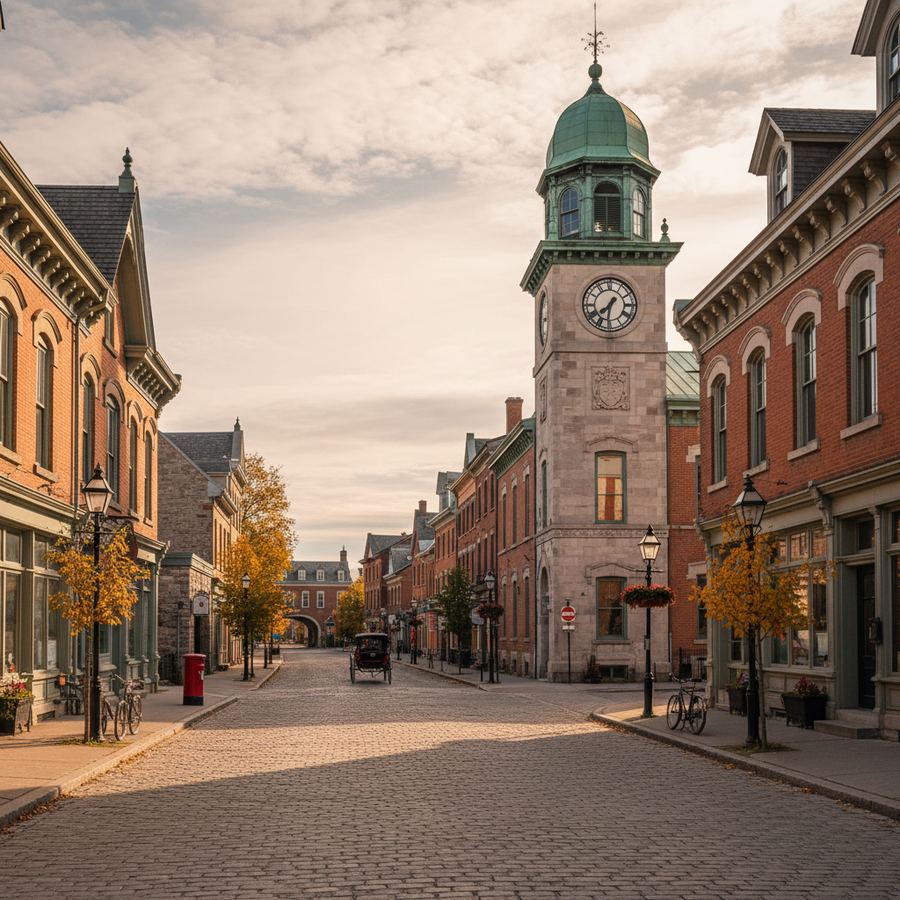
Port Hope has the strongest claim to the title of Ontario's best-preserved heritage downtown. The streetscape along Walton Street is almost entirely intact from the 19th century, with original storefronts, decorative brickwork, and second-floor details that most towns lost decades ago. This isn't a reconstruction. These buildings have been in continuous commercial use, and the town has enforced heritage guidelines that kept the worst renovation impulses at bay. The Capitol Theatre, a 1930 movie palace with its original interior, is the centrepiece. The Ganaraska River runs through the middle of everything, adding a natural anchor to the built heritage. Port Hope is about 1 hour and 15 minutes east of Toronto on the 401, and it pairs naturally with neighbouring Cobourg for a full day trip.
Penetanguishene
Penetanguishene has a downtown that reflects its unusual history as one of Ontario's oldest communities, with French and English roots predating most of the province's towns by decades. The main street has a mix of brick and frame buildings, some dating to the mid-1800s, with shops and restaurants that cater to locals rather than tourists. The bilingual street signs are a reminder that this was a francophone community long before it became part of the broader Georgian Bay tourism region. Discovery Harbour, the reconstructed British naval base on the waterfront, adds a major heritage attraction to what's already a historically interesting town. The scale of Penetanguishene's downtown is intimate, walkable in twenty minutes, which makes it easy to see everything without feeling rushed.
Owen Sound
Owen Sound has a downtown built on the wealth of a 19th-century port town, and the architecture reflects that ambition. The commercial buildings along 2nd Avenue East and the surrounding blocks are solid brick and stone, many with decorative cornices and arched windows that speak to an era when even a hardware store was expected to look dignified. The Tom Thomson Art Gallery anchors the cultural side of the downtown, and the Saturday farmers' market on the harbour has been running for over a century. Owen Sound's downtown has gone through cycles of decline and revival, and the current trend is positive, with new restaurants and shops filling formerly vacant storefronts. The walk from downtown to the harbour gives you a condensed version of the town's entire history, from lumber baron mansions to working waterfront.
Perth
Perth is in Lanark County, about an hour southwest of Ottawa. The town was settled by Scottish and Irish immigrants in the early 1800s, and the downtown architecture reflects that stone-building tradition. The Tay River runs through the centre, crossed by a pedestrian bridge that connects the two halves of the commercial core. Perth's heritage buildings house a mix of restaurants, antique shops, and galleries, and the town has a summer farmers' market in the crystal palace, a Victorian-era exhibition hall. The Stewart Park Festival in July brings free music to the riverside. Perth doesn't get the same tourist traffic as some eastern Ontario towns, which means you can usually find parking and a restaurant table without much effort. The scale is perfect for a half-day visit, with enough to see that you won't feel shortchanged.
Elora
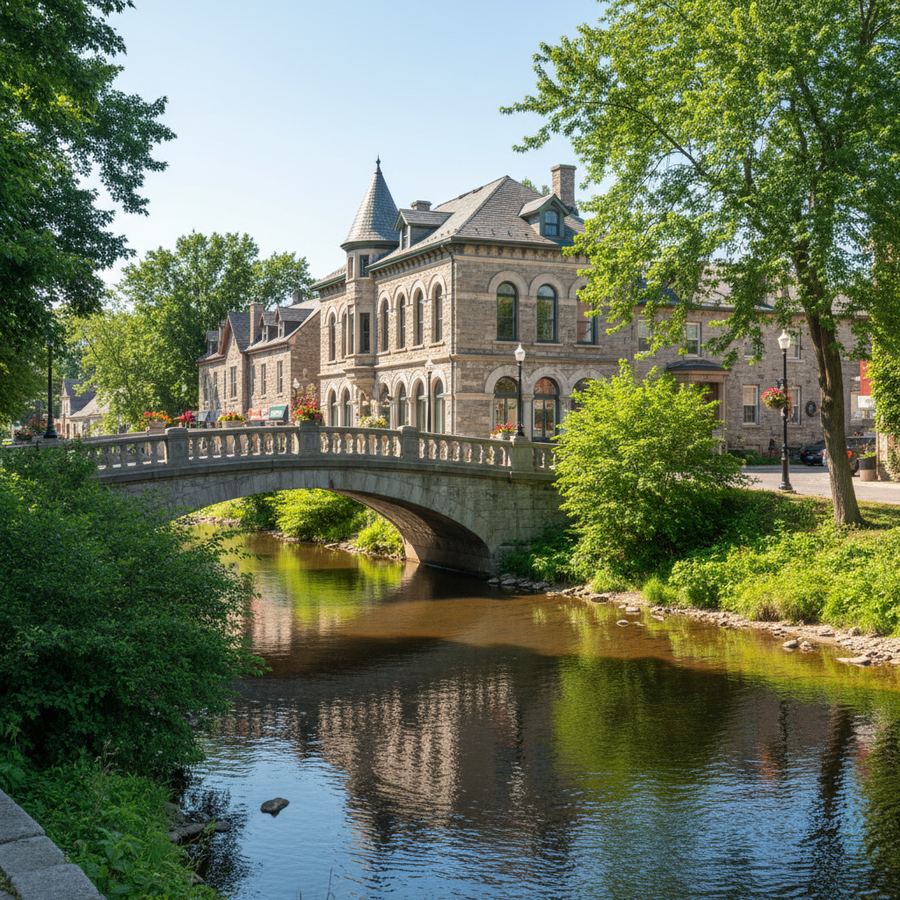
Elora's downtown is built from the same limestone that forms the gorge at its edge. The stone buildings along Mill Street have a solidity that brick towns can't quite match, and the concentration of galleries, restaurants, and shops in a two-block stretch is remarkable for a village this size. The Elora Mill, a converted grist mill that's been an inn for decades, anchors the lower end of the street near the river. On summer weekends, Elora can be crowded, with parking becoming a genuine challenge. But mid-week or in the shoulder season, the town rewards a slow walk and a long lunch. The gorge overlooks are a two-minute walk from the main street, giving you a natural spectacle alongside the built heritage.
Niagara-on-the-Lake
Niagara-on-the-Lake has been a tourist destination for so long that it's easy to overlook its genuine historical significance. This was the first capital of Upper Canada, and the town was burned during the War of 1812 and rebuilt in the decades that followed. Queen Street is lined with heritage buildings that now house upscale shops, restaurants, and the Shaw Festival theatres. The town is manicured to a degree that can feel overly polished, and summer crowds can be intense. But the heritage fabric is real, and a walk through the residential streets reveals houses dating to the 1820s and 1830s. Fort George National Historic Site, on the edge of town, adds a military history layer. Niagara-on-the-Lake is about 90 minutes from Toronto, though wine country traffic can extend that on weekends. Visit in spring or fall for better parking and a calmer pace.
Merrickville
Merrickville sits on the Rideau Canal, about 90 minutes south of Ottawa, and its downtown is a showcase of eastern Ontario stone architecture. The buildings along St. Lawrence Street house artist studios, antique dealers, and restaurants, all within a two-block stretch that's easy to cover on foot. The Rideau Canal lock station is at the edge of the downtown, and watching boats navigate the locks is one of those simple pleasures that works for all ages. Merrickville's small size means it can feel quiet on weekdays, but that's part of the appeal. The stone walls, the canal, the bridge, it all holds together in a way that feels intentional and cared for. The Rideau Canal itself is a UNESCO World Heritage Site, and Merrickville is one of its most attractive stops.
Almonte
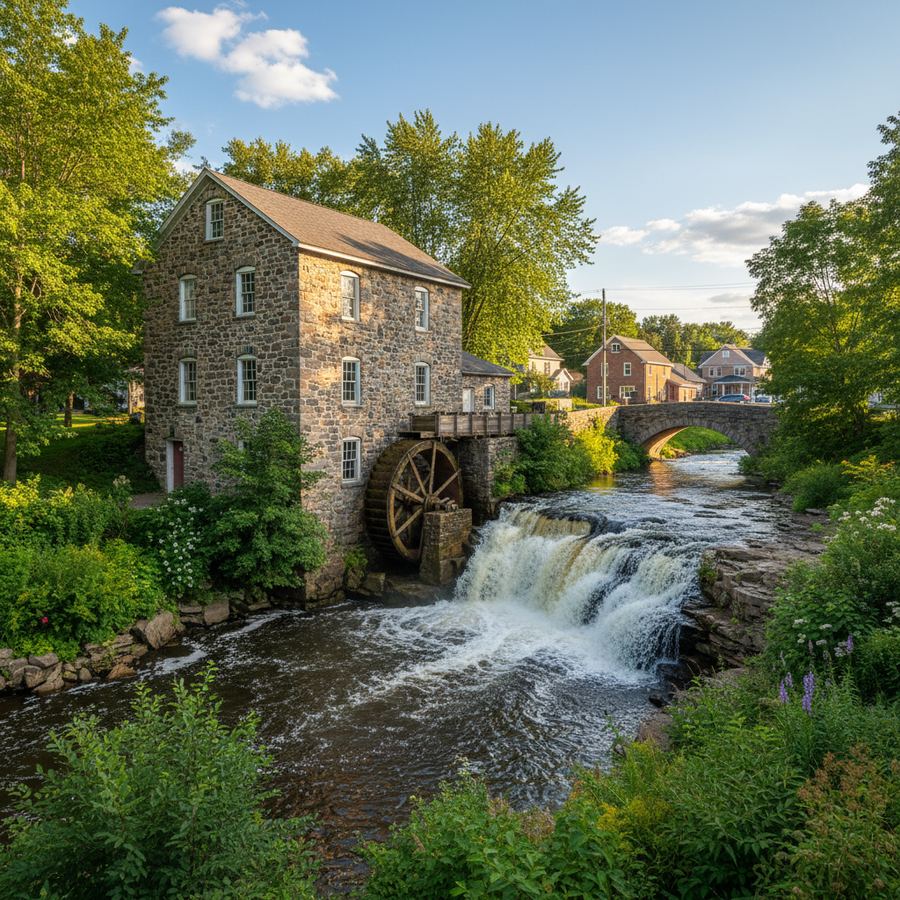
Almonte, 30 minutes west of Ottawa, grew up as a mill town on the Mississippi River, and the heritage buildings in the downtown core reflect that industrial prosperity. The old mill buildings have been repurposed into shops, restaurants, and creative spaces, while the main street retains a 19th-century commercial character. The river runs right through the centre, with a waterfall visible from the main bridge. Almonte has become increasingly popular as an Ottawa-area day trip, and the food scene has grown to match. Several restaurants operate out of heritage buildings, and the farmers' market is a good Saturday morning draw.
What Makes a Historic Downtown Work
Preservation matters, but it's not enough on its own. The towns on this list work because the heritage buildings have viable businesses inside them. A perfectly restored storefront with a "for lease" sign in the window doesn't create the same energy as a slightly worn building with a busy bakery at street level. The best historic downtowns balance conservation with commerce, keeping the built fabric intact while making sure there's a reason for people to walk through the door.
For more Ontario towns with character, explore our small towns guide or browse regional hubs for specific areas of the province.