Best Small Town Day Trips in Ontario
Main streets, back roads, and the Ontario towns that make the trip worth it
Ontario's small towns don't advertise themselves the way the big tourist destinations do. There are no billboards on the 400 series highways directing you to a village of 3,000 people with a good bakery and a Friday night farmers' market. You have to know where to look, or better yet, be willing to get off the highway and follow the county road signs.
The towns below have earned their place on this list the hard way: by maintaining real main streets, supporting local businesses, and keeping the kind of character that makes you slow down and pay attention. None of them require an overnight stay, though a few will tempt you to linger.
Stayner
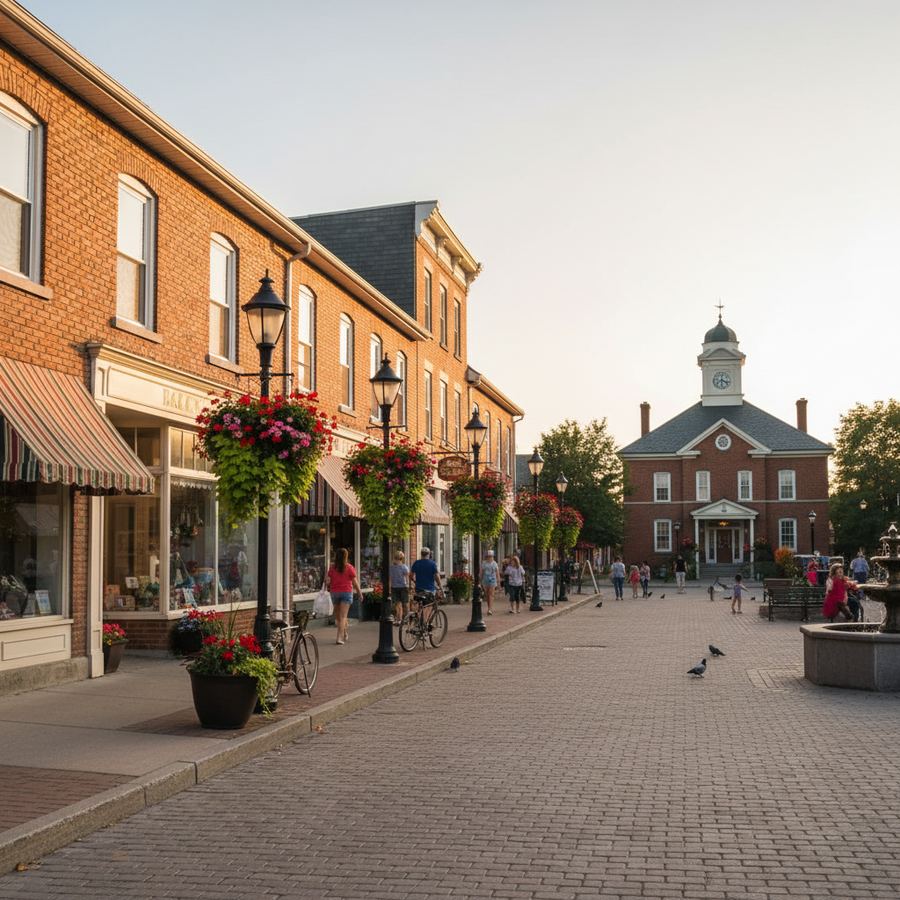
Stayner is a Simcoe County town about 90 minutes north of Toronto, sitting in the farmland between Wasaga Beach and Collingwood. The main street has a hardware store, a bakery, a couple of restaurants, and a Saturday market that fills the downtown core during the growing season. Stayner hasn't been polished up for visitors, and that's the appeal. This is a working agricultural town where the pace is honest and the coffee is strong. If you're heading to Georgian Bay, Stayner makes a worthwhile stop instead of blowing straight through on Highway 26.
Shelburne
Shelburne sits on Highway 10 about an hour north of Brampton, in the rolling hills of Dufferin County. It's best known for the Canadian Open Old Time Fiddle Championship, held every August, which fills the town with music and draws competitors from across the country. Outside of festival season, Shelburne is a quiet place with a classic Ontario main street, a few solid restaurants, and a growing arts community. The town is also a useful stopover if you're driving north toward Owen Sound or the Bruce Peninsula. Grab lunch, stretch your legs, and give the main drag a walk before getting back on the road.
Elora
Elora is about 90 minutes west of Toronto, perched on the edge of the Elora Gorge where the Grand River cuts through 22 metres of limestone. The gorge is spectacular, but the town itself deserves equal billing. Mill Street is lined with stone buildings that date back to the mid-1800s, now home to galleries, restaurants, and an excellent bookshop. The Elora Mill, a converted 19th-century grist mill turned luxury inn, anchors the downtown. In summer, the Elora Quarry is a popular swimming spot, though it can be packed on hot weekends. The Fergus-Elora area hosts the Riverfest music festival and a Highland Games, giving the region a cultural calendar that punches well above its weight class.
St. Jacobs
St. Jacobs is in Waterloo Region, about 90 minutes from Toronto. The village sits in the heart of Mennonite country, and horse-drawn buggies on the roads are a daily sight, not a tourist performance. The St. Jacobs Farmers' Market, one of the largest in the province, operates on Thursdays and Saturdays with vendors selling produce, baked goods, meats, and maple syrup. The village itself has a main street of shops, including a well-known quilt store and several outlets. The St. Jacobs community has done a good job of balancing tourism with the working agricultural character of the area, though the market parking lot tells you this is no longer a local secret.
Creemore
Creemore is in Simcoe County, about 90 minutes from Toronto, and it's the kind of place that architects and urban planners hold up as an example of a small town that got it right. Mill Street runs through the centre, lined with low-rise heritage buildings, independent shops, and the Creemore Springs Brewery, which helped put the town on the map. The brewery does tours and tastings, and the pub next door is a good place to settle in. Creemore's population is under 1,500, but the town has a bakery, a butcher shop, a general store, and a vibe that feels genuinely self-sufficient rather than dependent on tourism. Pair it with Stayner for a Simcoe County small-town loop.
Merrickville
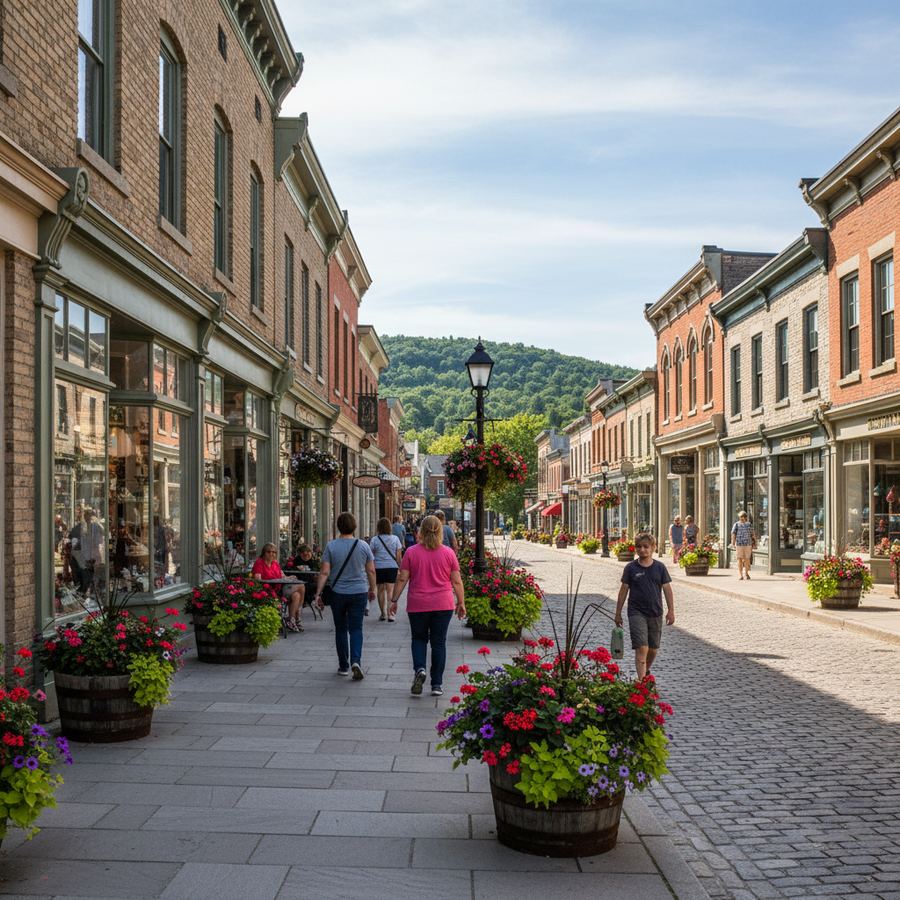
Merrickville sits on the Rideau Canal about 90 minutes south of Ottawa. The Rideau Canal is a UNESCO World Heritage Site, and Merrickville's lock station is one of the most scenic along the entire route. The town's main street has stone buildings, artist studios, and a concentration of independent shops that feels improbable for a village of fewer than 1,000 people. In summer, watching boats lock through is free entertainment that never quite gets old. Merrickville works well as part of an eastern Ontario road trip, especially combined with Perth or Smiths Falls.
Westport
Westport is at the western end of Upper Rideau Lake, about 2 hours southwest of Ottawa. The town has a strong arts community, with galleries, a summer theatre, and a main street that feels like it belongs in a place three times its size. The Cove, a country inn on the waterfront, is a local institution. Westport is also the trailhead for the Rideau Trail and a popular launch point for paddling on the Rideau system. This is a town that rewards a slow visit. Walk the main street, eat at a local restaurant, and sit by the water for an hour. That's the trip.
Burk's Falls
Burk's Falls is about 2 hours and 45 minutes north of Toronto on Highway 11, right at the edge of cottage country. The town sits where the Magnetawan River drops over a series of falls, and a riverside park offers views of the cascading water right from the centre of town. Burk's Falls is small and quiet, with a handful of shops and restaurants that serve the surrounding Muskoka-Almaguin region. It's the kind of place you stop when you're driving north and then find yourself staying longer than expected. The river walk is short but scenic, and the town has a genuine warmth that bigger resort communities sometimes lack.
Almonte
Almonte is 30 minutes west of Ottawa, on the Mississippi River. The town's heritage mill buildings have been converted into shops, restaurants, and studios, and the main street along Mill Street has one of the best concentrations of independent retail in eastern Ontario. Almonte was the birthplace of James Naismith, the inventor of basketball, and a small museum honours that legacy. The town punches above its weight for food, with several restaurants that would hold their own in a city ten times its size. Fall is especially good here, when the river turns the surrounding trees into a wall of colour.
Fergus
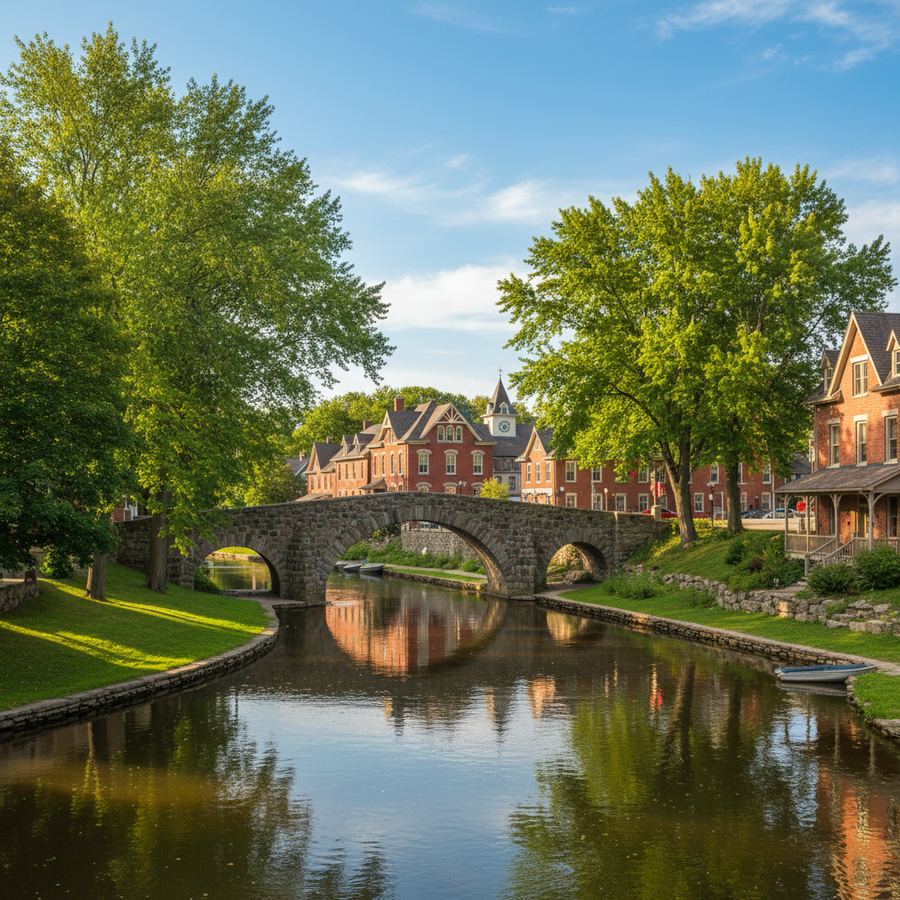
Fergus is the slightly bigger neighbour to Elora, about 90 minutes from Toronto. Scottish heritage runs deep here, and the Fergus Scottish Festival and Highland Games, held every August, is one of the largest in North America. The downtown has solid limestone architecture, a tower clock, and the Grand River running through the middle of things. Fergus is a good base for exploring the gorge country around Elora without the same parking headaches that Elora sometimes presents on busy weekends.
Making the Most of a Small-Town Day Trip
The best advice for small-town trips is simple: slow down. These places don't have major attractions that demand three-hour visits. They have main streets, local restaurants, and a rhythm that only reveals itself if you stop rushing. Talk to the person behind the counter at the bakery. Sit in the park for twenty minutes. Walk the residential streets and look at the old houses. That's the trip, and it's enough.
For more ideas, explore our small towns hub or start planning a route through one of Ontario's best small-town regions.