Best Waterfront Day Trips in Ontario
Lake towns that reward the drive, every season of the year
Ontario sits on the edge of four Great Lakes and a web of inland waterways, which means waterfront towns are scattered across the map in every direction. Not all of them are worth a dedicated trip. Some have let their waterfronts decay behind industrial fencing. Others have paved over their character with chain restaurants and big-box parking lots. The towns on this list have done the opposite. They've kept their harbours accessible, their downtowns walkable, and their connection to the water front and centre.
If you're looking for a day trip that ends with a sunset over open water, start here.
Owen Sound
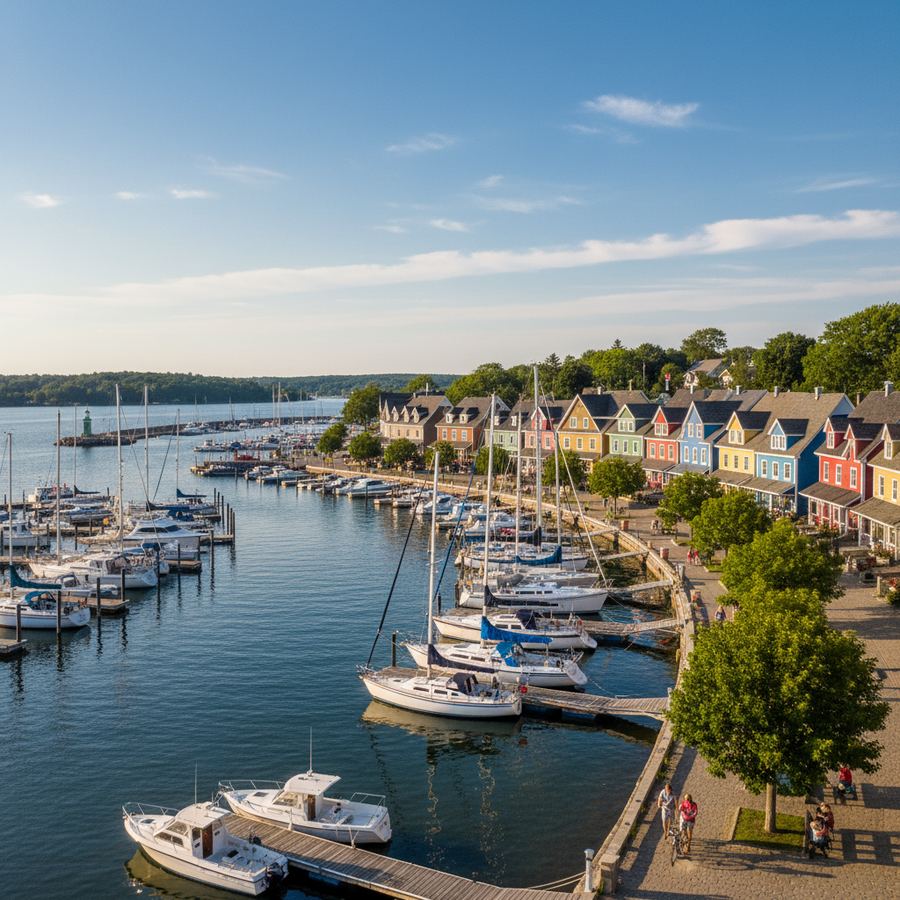
Owen Sound sits at the foot of a deep harbour where the Sydenham River meets Georgian Bay, about 2 hours and 40 minutes north of Toronto via Highway 10. This is a working harbour town with real grain elevators and a busy Saturday farmers' market, not a resort dressed up for tourists. The waterfront trail follows the harbour from the inner basin out toward the breakwater, passing the Tom Thomson Art Gallery along the way. Harrison Park, a ten-minute drive south of downtown, has swimming in the Sydenham River, hiking trails, and picnic grounds shaded by old-growth trees. For waterfalls, Inglis Falls is the marquee attraction, a 18-metre cascade right on the edge of town. Jones Falls and Indian Falls are both within a short drive. Owen Sound is the kind of place where you plan for an afternoon and end up staying until dark.
Kincardine
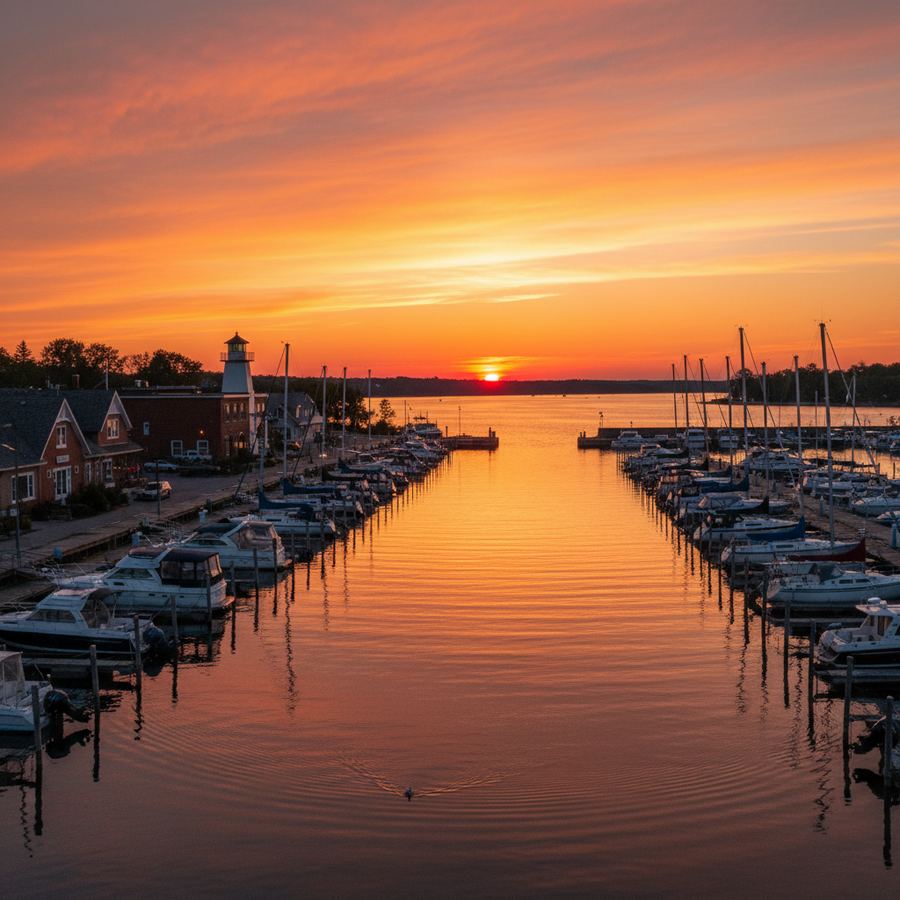
Kincardine faces due west across Lake Huron, about 2 hours and 45 minutes from Toronto. That westward orientation is the whole point: the sunsets here are extraordinary, painting the sky above a flat horizon of open water. The 1881 lighthouse at the harbour entrance is the centrepiece, but the town has more going for it than that single landmark. The downtown along Queen Street has good restaurants, a bookshop, and an old-fashioned feel that hasn't been manufactured. Station Beach, just south of the harbour, is a wide sandy stretch that stays swimmable through much of the summer. On Saturday evenings in July and August, a pipe band marches through the streets, a tradition that dates back decades. Kincardine works well as a standalone destination or as part of a longer Grey-Bruce road trip.
Penetanguishene
Penetanguishene occupies the southern tip of Georgian Bay's eastern shore, roughly 90 minutes north of Toronto. The harbour here is long and sheltered, historically a naval base and now home to one of the busiest marinas on the bay. Discovery Harbour, a reconstructed British military and naval establishment, brings 19th-century life to the waterfront with costumed interpreters and period ships. Beyond the heritage site, the town's main street is quieter than its neighbours, with local bakeries and galleries that haven't been overrun by franchise operations. The waterfront trail connects the harbour to the town dock, where you can sit on a bench and watch sailboats thread through the channel. Penetanguishene is best paired with nearby Midland for a full Georgian Bay day out.
Cobourg
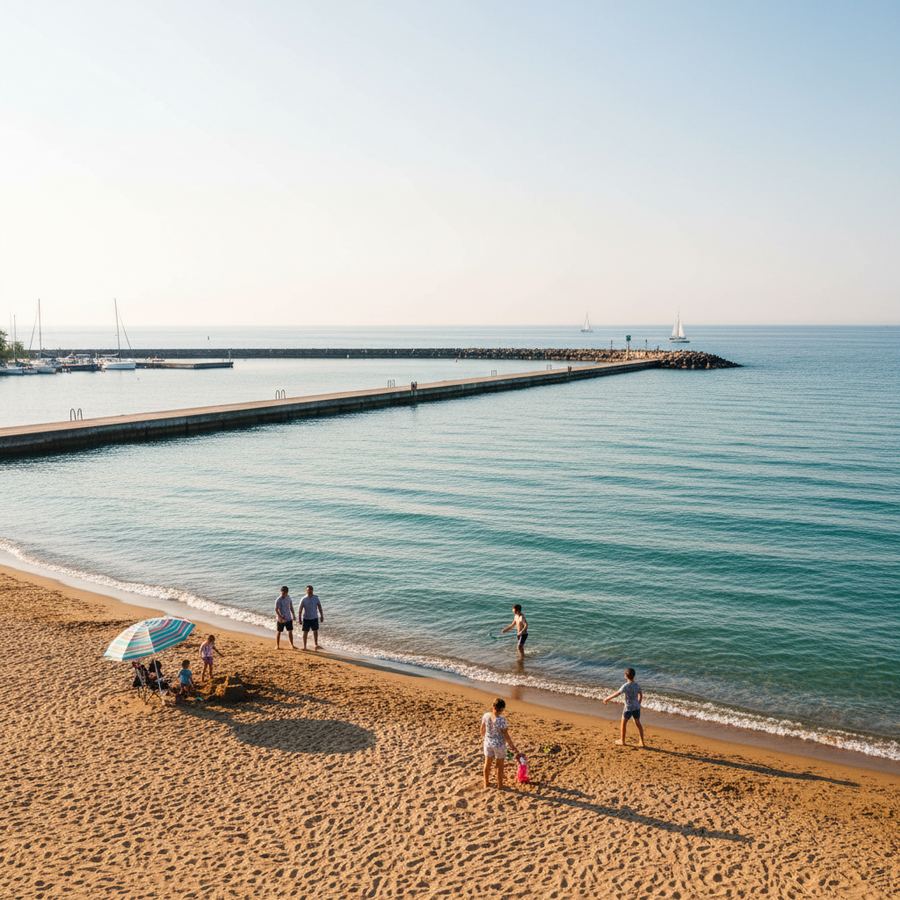
Cobourg sits on the north shore of Lake Ontario, about 1 hour and 15 minutes east of Toronto on the 401. Victoria Park beach is the main draw, a long crescent of sand that runs right through the heart of town. In summer, the beach has lifeguards, a splash pad, and a boardwalk that extends toward the marina. It gets crowded on hot weekends, so arrive before 11 a.m. if you want space. The real treat is walking up from the beach to King Street, where Victoria Hall, an imposing courthouse built in 1860, anchors a downtown full of independent shops and cafes. Cobourg is easy to reach and easy to love, which is exactly why it fills up quickly. Mid-week visits or shoulder-season trips reward you with the same waterfront and a fraction of the crowds.
Port Hope
Port Hope is ten minutes east of Cobourg and arguably Ontario's best-preserved 19th-century downtown. The Ganaraska River runs through the centre of town, and in September the river fills with migrating salmon while locals line the Walton Street bridge to watch. The heritage streetscape hasn't been rebuilt or themed. These are original storefronts, carefully maintained, with second-floor details that reward a slow walk. The Capitol Theatre, a 1930s movie palace, still shows films. Port Hope works beautifully as a combined trip with Cobourg, giving you a full day trip with a beach stop and a heritage town in one outing.
Goderich
Goderich is about 3 hours west of Toronto, perched on a bluff above Lake Huron. The town is laid out around a central octagonal square, a unique design that radiates outward like a wheel. Two beaches sit below the bluffs, connected by a boardwalk that winds along the base of the cliff. The harbour is home to a working salt mine that has operated since the 1860s, and a long breakwater pier that's excellent for walking. Goderich took a direct hit from a tornado in 2011 and has spent years rebuilding, which gives the town an interesting mix of heritage architecture and fresh investment. The southwestern Ontario coastline in this area is beautiful, and Goderich is the natural anchor point for exploring it.
Tobermory
Tobermory sits at the tip of the Bruce Peninsula, about 4 hours from Toronto. This is the end of the road in the most literal sense, and the remoteness is part of the appeal. The village has two harbours: Big Tub, where glass-bottom boat tours reveal shipwrecks in startlingly clear water, and Little Tub, lined with restaurants and outfitters. Tobermory is the gateway to Bruce Peninsula National Park, where the Grotto, a sea cave on the Georgian Bay side, has become one of Ontario's most photographed spots. Reservations are required for park access in peak season, so plan ahead. The Chi-Cheemaun ferry to Manitoulin Island also departs from here. Tobermory is a long drive for a day trip, but if you're already in the Bruce Peninsula area, it's the crown jewel.
Collingwood
Collingwood is about 90 minutes from Toronto, sitting on Nottawasaga Bay at the base of Blue Mountain. The old grain terminal still looms over the harbour, but the surrounding blocks have filled in with breweries, restaurants, and independent shops. Millennium Park, on the waterfront, has a pebble beach and connects to a trail system that runs along the shore. In winter, Blue Mountain Resort draws skiers, but the town's waterfront character shines brightest from May through October. Collingwood is busier and more developed than some entries on this list, which means more dining options but also more traffic on summer weekends.
Planning Your Trip
Most of these towns are at their peak between Victoria Day and Thanksgiving. Summer brings the warmest water and the fullest patios, but also the biggest crowds. September and October are ideal for quieter visits, especially along the Lake Huron shore where fall colour meets the water. For more options, explore our waterfront towns hub or check Ontario Parks for provincial beaches near each town.
Pack sunscreen, bring a camera, and leave room in the day for unplanned stops. The best waterfront towns don't reveal everything from the parking lot. Walk the harbour, find the breakwater, and stay for the light.